
What did the Normans ever do for us?
2 February 2028 - 22 March 2028
10.45 – 12.45 Wednesdays
£89.00 – £590.00
Description
The Norman Conquest, and the Conqueror himself, have been much in the news, with exhibitions at both the British Museum and the British Library. This course will cover the art and architecture of Normandy, England, and (to a lesser extent) the parts of Southern Italy and Sicily conquered by the Normans from c.1050 to c.1160. This is a period of great inventiveness across the arts and, indeed, across Europe and also a period of great political turmoil.
“Very enjoyable. Richard is fun AND knowledgeable. I’ve learnt something!”
Course Outline
02 Feb 2028 – England Before the Conquest
England had endured a turbulent time in the century before the Conquest. Nevertheless, it was a fertile period artistically, particularly in the field of manuscript illumination the paintings of which are amongst the finest this country has produced. We shall also touch on the precious arts of metalwork and ivory and consider the eccentric but charming architecture of the late Anglo-Saxon period.
09 Feb 2028 – Normandy
We will start by considering how Normandy came to be and its political geography. The architectural style developed there is the most visible product of the Conquest in 1066. This talk will also introduce the Norman conquest of Southern Italy and the cultural complexity of the region they encountered there.
16 Feb 2028 – Conquest and Consequences
The most famous Norman object, the Bayeux Tapestry, concerns itself directly with Conquest. Famous as it is, the Tapestry remains rather enigmatic. The Conquest also brought a new form of building to England, the castle, and this lecture will deal with secular architecture from the whole of the period covered in the course.
23 Feb 2028 – The Development of Religious Architecture in England and Southern Italy
The great churches of Anglo-Saxon England were all replaced within 50 years of the Norman invasion in a building boom which fostered constant innovation. In Southern Italy the results are steeped in Mediterranean and Roman traditions, but none the less inspiring.
01 March 2028 – Sculpture
All over Europe the later 11th and 12th centuries see a revival in stone sculpture. England and Apulia are exceptional in having early traditions in sculpture from before the Conquest(s) but we will focus on the grand schemes which flourished in the late eleventh and twelfth centuries, considering the uses of carved imagery and the sources sculptors drew on.
08 March 2028 – Manuscripts
After a rather slow start, the manuscripts of post-Conquest England are of great richness, and the lecture will focus on a few well-known examples, the St Alban’s Psalter, the Bury and Winchester Bibles, among others. Here we will also talk about the surviving arts in metalwork and ivory from the Norman realms.
15 March 2028 – Wall Paintings and Other Monumental Schemes
The decorative schemes which covered the walls of the great churches can sometimes be hard to recover. However, the fragments that survive in England are evocative, and the grand schemes in Southern Italy (including mosaics) are among the most celebrated works of the period. There will be a brief excursion to Northern Spain where artists who had worked in England produced an exceptional (if damaged) cycle of paintings.
22 March 2028 – The Norman Achievement
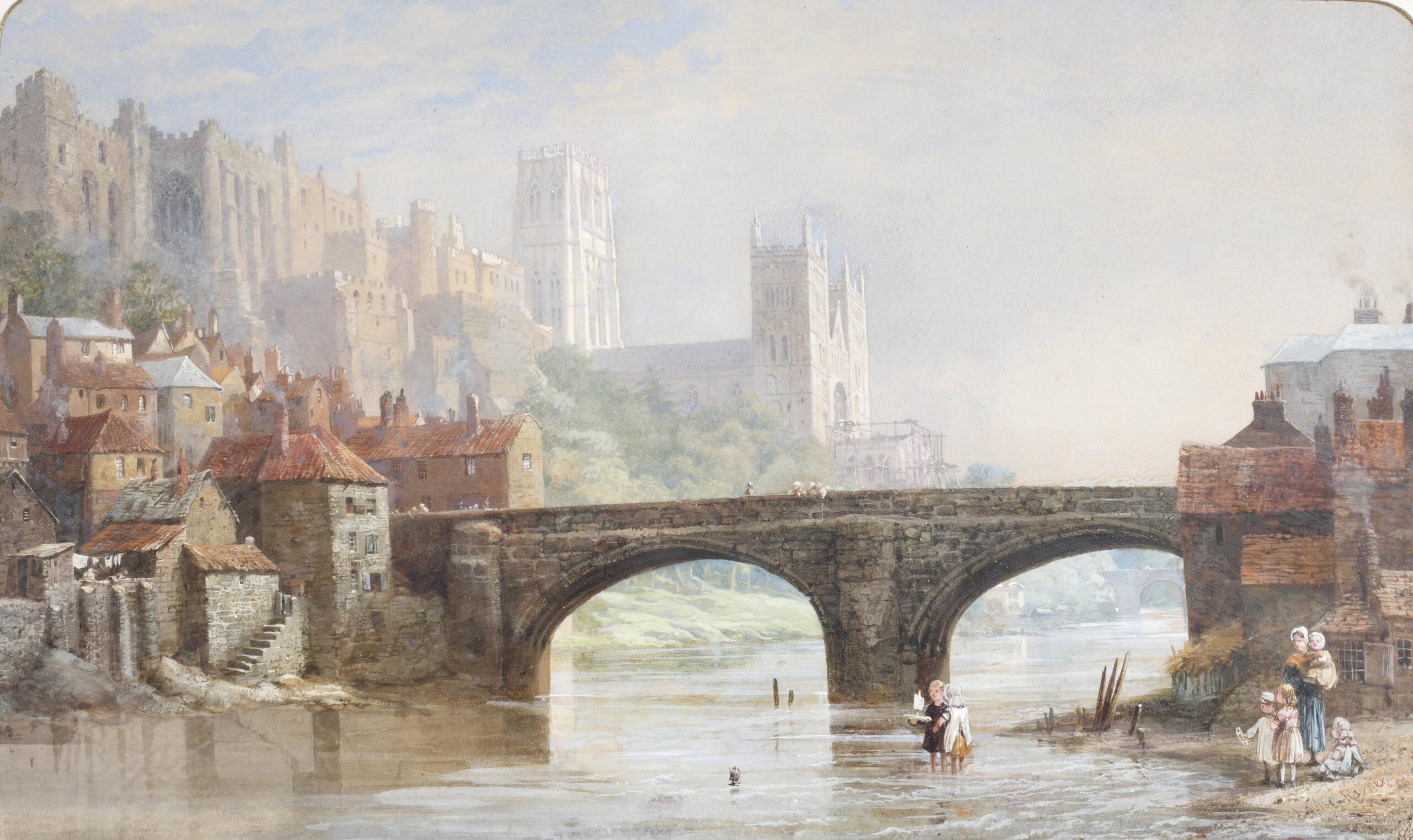
To conclude the course, we will consider a few of the greatest works of Norman Europe. We will focus to a degree on Durham Cathedral, unpicking what is owed to the past and in what ways it prefigures the development of Gothic